
Twelve weeks. Every child designs a toy and pitches it.
Every child turns their hero into a collectible toy, builds a brand around it, and pitches it to judges at a Toy Fair. The child is the founder; AI is their design team, research assistant and pitch coach.
-
Weeks 1–2
Understand the market
Study hit toys, then interview real classmates.
-
Weeks 3–5
Design the toy
Turn the hero into a toy, make a collection, build a prototype.
-
Weeks 6–8
Build the brand
A name, a logo, a box, and a price they check themselves.
-
Weeks 9–11
Sell it
An honest ad, and a pitch rehearsed with an AI coach.
-
Week 12
Toy Fair
A stand, a pitch to judges, and parents invest play tokens.
The term at a glance
- Topic
- Design, branding and pitching
- Goal
- A toy, its box and a pitch, shown at the Toy Fair
- Length
- 12 weeks · 1 hour a week
- Ages
- 8–9 and 10–11 tracks
- Starts from
- The hero from Terms 1 and 2
- Prototype
- A paper toy, or a 3D print if the school has a printer
- New to the club?
- Create a hero in week 1, join the class in week 2
What every child leaves with
- A toy prototype
- A toy box they built
- A year portfolio
- A certificate
Week by week
Five phases, one mission a week.
Understand the market, design the toy, build the brand, sell it, Toy Fair. Every week ends with something concrete saved on the platform.
- 01What makes a hit toy?Hit toy recipe
- 02Know your customerCustomer card
- 03Design the toyToy design
- 04Make it a collectionCollection sheet
- 05Build the prototype3D model + prototype
- 06Brand itBrand card
- 07Design the boxToy box
- 08Price itPrice card
- 09Make the adAd
- 10Build the pitchPitch + slides
- 11Practise with an AI coachFinal pitch
- 12Toy Fair and Pitch DayYear portfolio
How a club session runs
One hour a week, same rhythm every time. The teacher follows the script; Candide runs the AI.
Real-world tasks keep it hands-on: interviewing classmates, building a paper box, doing the maths.
-
01 · Warm-up · 5 min
Kids join and focus
A “Real or AI?” product photo, or a famous toy to talk about, while children join the club.
-
02 · Mini-lesson · 10 min
The teacher plays the week’s lesson
A short video and demo on the class screen, then the mission explained. The script tells them what to say.
-
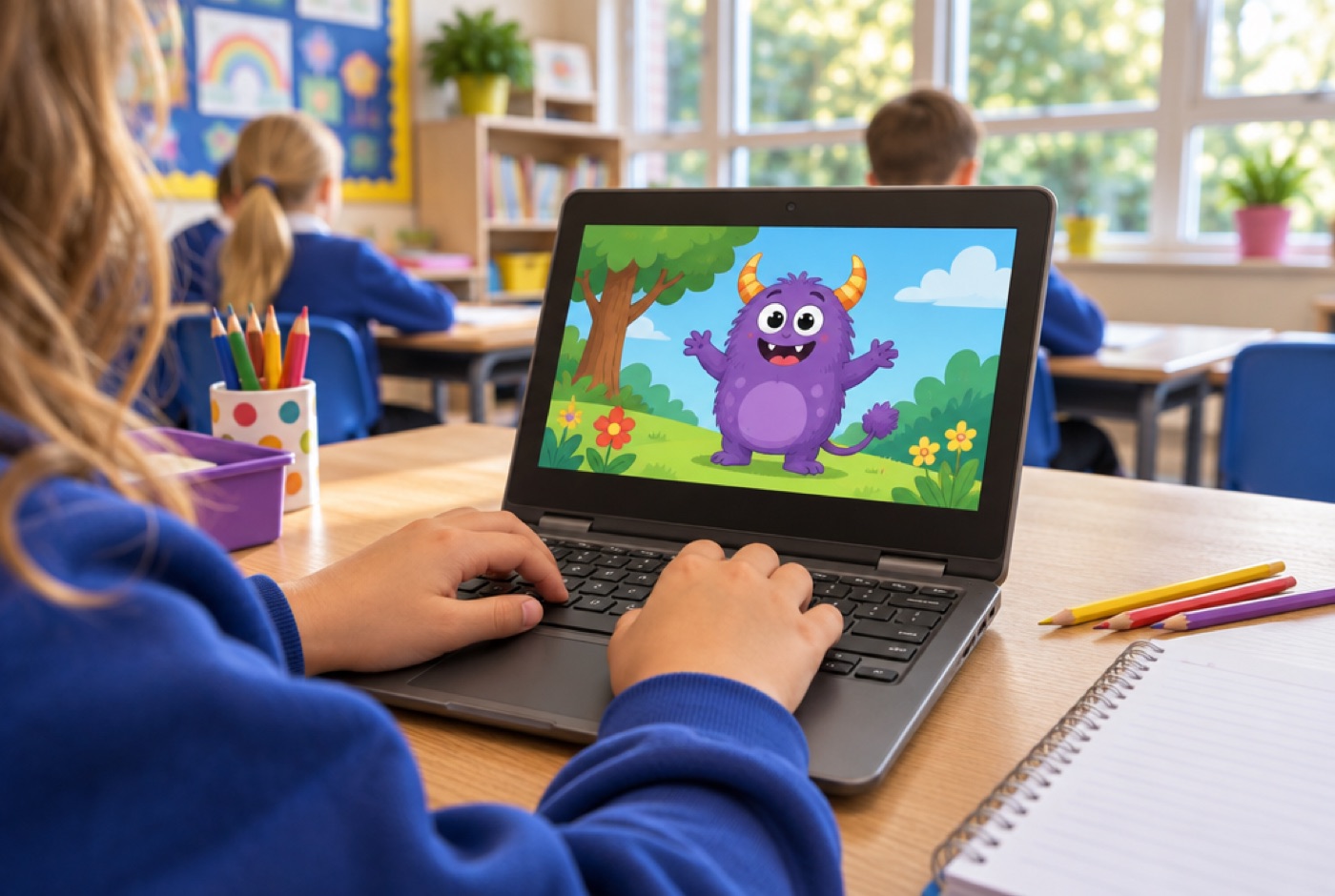 03 · Studio time · 35 min
Every child builds
On paper, with classmates or on the platform, with an AI helper that gives options and never decides for them.
-
04 · Founders’ meeting · 10 min
Two or three founders report
Each shares their progress in one sentence. Everyone saves, and the teacher previews next week.
-
Rule 1 · You are the founderYou make the decisions; AI gives options and advice.
-
Rule 2 · Check before you trustFacts and numbers from AI get checked by a person, a calculator or a real source.
-
Rule 3 · Real people beat AIWhen you want to know what kids like, ask kids.
-
Saved every weekEach week ends with a design, a box or a pitch on their board, ready for the next one.
What children learn
Eight AI skills, learned by building a toy business.
Week 2 starts with this: ask AI who will buy the toy, then ask three classmates. Children see for themselves that AI guesses and people know.
Pretend you’re 9. What toy would you buy?
Not the children in this class.
What would make you want Rafi?
Now the toy has a customer.
- Researching with AI, then checkingAI can be wrong about facts. Week 1.
- Asking real peopleAI guesses; people know. Week 2.
- Restyling a characterFrom comic hero to toy. Weeks 3 and 4.
- From 2D to 3DAnd what AI gets wrong in 3D. Week 5.
- Checking originalityTen names from AI, then check it isn’t a real brand. Week 6.
- Checking AI’s numbersEvery price checked with a calculator. Week 8.
- Advertising honestlySpotting marketing tricks, and not using them. Weeks 4 and 9.
- Practising with an AI coachThree judge questions, then a better pitch. Week 11.
Two age tracks
Same twelve missions. The older track goes deeper on the business side.
Ages 8–9
- Collection
- 1 toy + 3 variants
- Research
- 3 interviews, a picture answer sheet
- Prototype
- A paper toy, or a 3D print if the school has a printer
- Pricing
- Cost + profit = price, with simple numbers
- Ad
- A poster
- Pitch
- 1 minute, 3 slides
- About AI
- AI can be wrong: check facts and numbers
Ages 10–11
- Collection
- A series of 6 + 1 secret edition
- Research
- 5 interviews and a written summary
- Prototype
- A 3D model and a 3D print
- Pricing
- A small spreadsheet: cost, price, units sold, profit
- Ad
- A 15–30 second video
- Pitch
- 2 minutes, 5 slides, 2 questions from the judges
- About AI
- How real companies use AI, and where people still decide
Safety
Products, money and ads, handled with care.
Every rule from Terms 1 and 2 still applies. Toys, money, ads and a pitch coach add these.
-
No real moneyParents invest play tokens. Nothing is sold on the platform.
-
No copying real brandsOriginal toys and names only; well-known toy brands are blocked.
-
Honest advertisingAds can’t make false claims, and week 9 teaches why.
-
A coach that sticks to the pitchIt only asks about the toy and the business, and the teacher sees every conversation.
Week 12 · Toy Fair & Pitch Day
The whole year, on one stand.
Each child runs a stand and pitches to judges, and parents see a comic, a film and a toy made by their child. Candide supplies the stand signs, tokens or QR voting, judges’ cards, awards, certificates and the invitation.
-
A stand per childThe prototype, the box, the collection sheet, and the ad playing on a tablet.
-
A judges’ panelThe principal, a teacher, and a parent who runs a business.
-
Parents investFive play tokens each; the most-invested toy wins People’s Choice.
-
The year portfolioThe printed comic, a QR code to the film, the toy box and the certificate.
The hero comes back all year
- T1Available now
- T2Coming soon
- T3Turn Your Hero into a ToyComing soon
Term 3 · In preparation
Start with Term 1 next term.
Term 3 closes the year with the hero children invented in Term 1. Book a 20-minute demo and we’ll show you one mission end to end and how the year fits together.